
Detention tracking for small fleets
Detention time on the record, from your drivers' phones
Draw a geofence around each shipper and receiver. The driver's phone stamps arrival and departure without a check call. When a truck passes your free time, SpatialFlow emails your billing desk the dwell time and posts to dispatch.

How it works
- Draw a geofence around each dock you deliver to.
- Drivers start their shift in the free SpatialFlow app on their own phones. No hardware, no check calls.
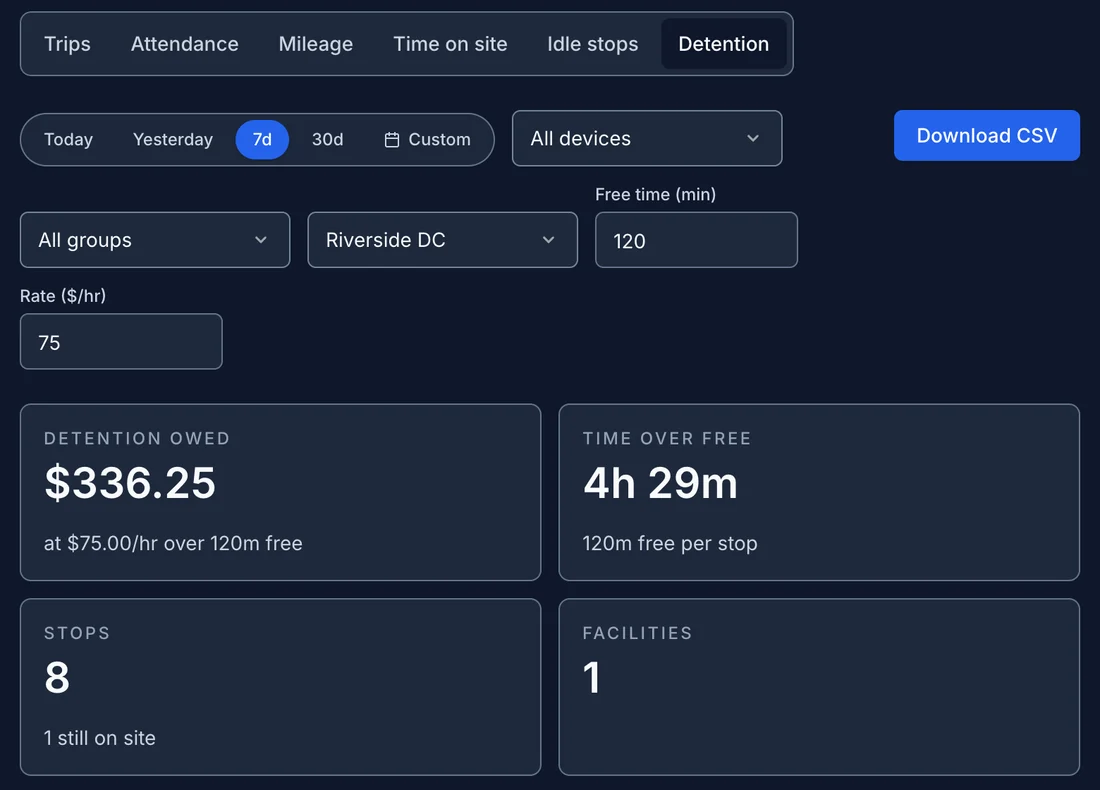
- When a truck passes free time, your rule emails billing and posts to #dispatch. The Detention report prices every stop and exports CSV.
The record
- WhenRiverside DC · dwell over 2h
- OnlyMon to Fri
- ThenEmail billing@ · Post to #dispatch
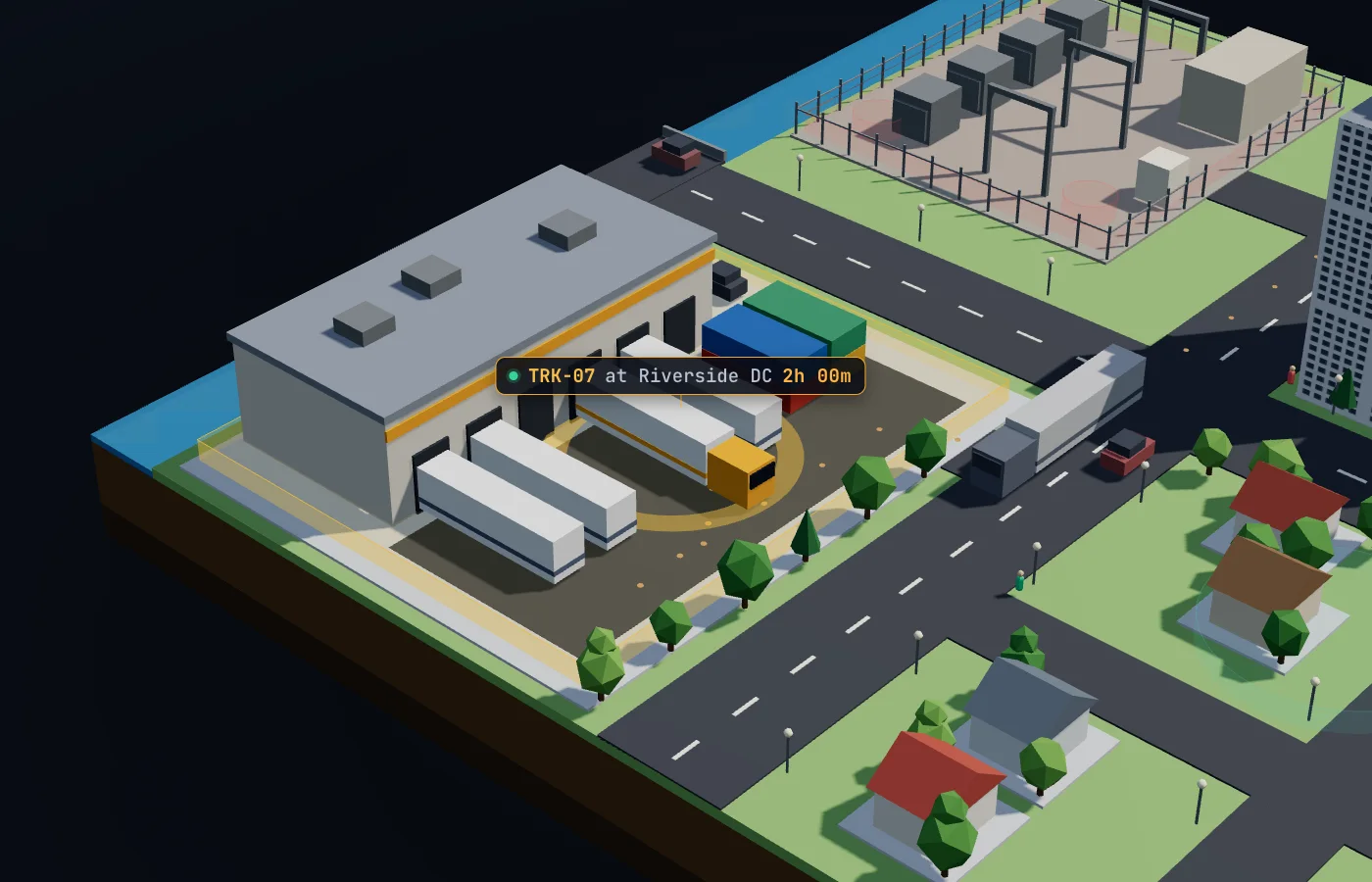
07:32  TRK-07  entered Riverside DC
09:32  TRK-07  passed 2h  → billing@ emailed
10:21  TRK-07  left · on site 2h 49m

What it proves
GPS timestamps from the driver's phone back up a detention claim. Your rate confirmation and signed BOL still decide what gets paid.
The American Transportation Research Institute found that 94.5 percent of carriers charge detention, but they end up paid for fewer than half of their detention incidents. ATRI, September 2024
Questions crews ask first
Does it work with our ELD?
Not directly. SpatialFlow uses the driver's phone, or any device or system that can post locations to the API.
Our ELD already logs arrival times. What does this add?
Action when free time runs out. When a driver's phone passes free time at a geofence, a rule can email billing, post to Slack or Teams, text the dispatcher through your Twilio account, or call a webhook into your TMS. The Detention report does the rate math and exports CSV.
Will a broker accept it?
It gives you timestamped GPS evidence of arrival and departure and does the detention math. That supports a claim; your rate confirmation and BOL still decide what gets paid.